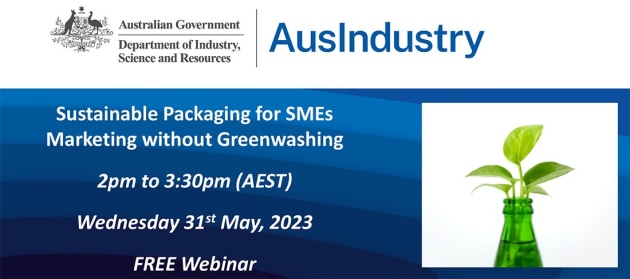

A webinar hosted by the Australian Institute of Packaging (AIP) will provide an opportunity for SMEs to hear from packaging experts and better understand how to avoid greenwashing in on-pack marketing.
The ACCC recently released a report in March on greenwashing by businesses in Australia, in which it was identified that some businesses are using vague or unclear environmental claims, not providing sufficient evidence for their claims, setting environmental goals without clear plans for how these will be achieved or using third-party certifications and symbols in a confusing way.
So how do Australian SMEs avoid falling into being perceived as greenwashing in the eyes of their customers and the regulators? Particularly where customers and consumers are reliant upon sustainability claims to make purchasing decisions.
SMEs will hear from experts at the Australian Institute of Packaging where the topics to be covered include:
- Greenwashing
- ACCC Green Marketing Guide
- Plastic Identification Codes
- Green Marketing Principles
- Legal on pack labelling requirements
- On-Pack and Off-Pack Labelling
- Certifications
- ARL – consumer insights
This free event will be of interest to those SMEs seeking to ensure they are clearly communicating and leveraging the sustainability practices they are quite often already doing in their businesses to their consumers and supply chains.
All of industry is invited to attend.
Book your place today here.