


The fifth AIP State of Industry Webinar, to be held on 21 August, will look at a wide range of successful product stewardship and ‘away from home’ programs that actively engage the consumer with the collection.
Product stewardship programs enable households access to recycling and safe disposal services for products once they have reached their end of life.
Many of the product stewardship programs have been designed to capture and reprocess packaging and materials that cannot be collected through a traditional materials recovery facility (MRF).
‘Away from Home’ collection and drop-off points are established for these materials or packs so that they don’t end up in landfill and can have a longer lifecycle.
Some hazardous and flammable products require safe disposal such as paints, chemicals and batteries, and away from home collection ensures the product is disposed of safely.
These programs keep valuable resources circulating in the economy for as long as possible, reduce the impact of a product on the environment and offer effective end-of-life recovery systems.
Whether it is soft plastics, pharmaceutical blister packs, aseptic cartons, make up, toner and ink cartridges, batteries, paint, e-waste or coffee cups, everyone can proactively engage with numerous product stewardship programs across the country.
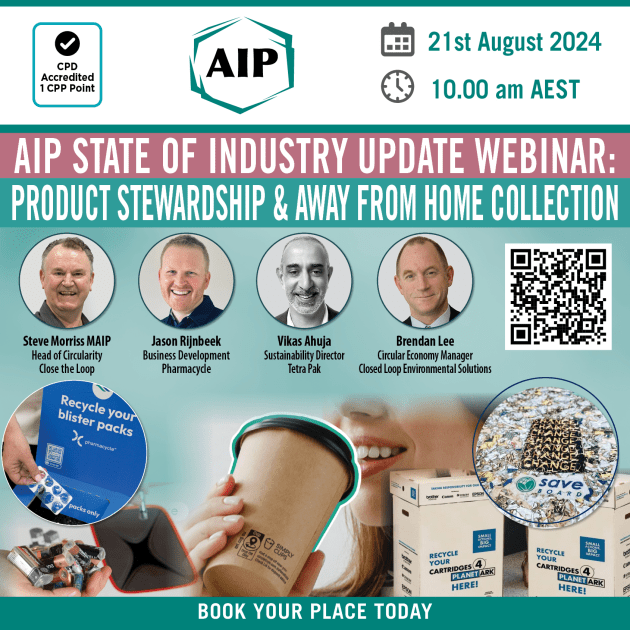
Panellists will include:
- Steve Morriss, head of circularity, Close the Loop
- Jason Rijnbeek, business development, Pharmacycle
- Brendan Lee, circular economy manager, Closed Loop Environmental Solutions
- Vikas Ahuja, sustainability director, Tetra Pak
Book your place today by clicking here and find out more about some of the unique and innovative programs that are available, as well as how your business and your household can get on board.
All AIP webinars attain points towards the Certified Packaging Professional (CPP) designation.


