


Coding and marking system manufacturer Squid Ink has introduced a new laser marking system for high-speed food and beverage, pharmaceutical, cosmetic, and other primary coding applications.
According to Squid the new SQ-50F Fiber Laser provides permanent coding of text, time and date, bar codes, and serial numbers on a variety of products including ceramics, plastics, matte metals, rubber, and composite materials. Squid says that due to the short wavelength of the fibre laser, the SQ-50F provides a solution for customers that require a high-contrast code on materials.
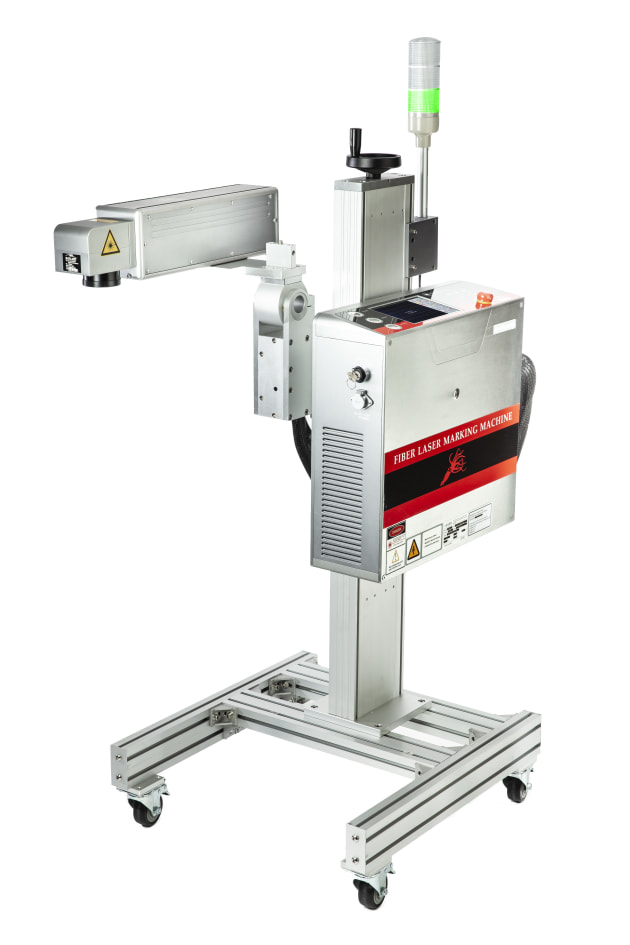
Fibre laser systems are more efficient than CO2 systems, resulting in cost savings, according to Squid Ink. On average, fibre laser systems gain more than 50,000 additional hours of use when compared to traditional CO2 systems.
The SQ-50F can be installed in both stationary and moving applications. Its small footprint means it can fit into production environments where space is limited. The head can be rotated 90 degrees in less than five minutes for applications requiring both vertical and horizontal marking.
The system features a cast-aluminium controller body and an IP54 rating to ensure reliability and uptime. Since there is no requirement for ink, it is a clean and eco-friendly system.
Squid Ink said users can mix fonts and logos in a single message and the option to produce discrete codes for anti-counterfeiting and traceability applications. Messages are programmed using a touchscreen interface.
The SQ-50F Fiber Laser marking system is available through Squid Ink’s network of authorised distributors, including Alpha Coding & Marking in Australia.


