



A rewards-based program which encourages families to recycle 'the unrecyclable' has been launched by organic snack manufacturer Whole Kids Australia and upcycling company TerraCycle.
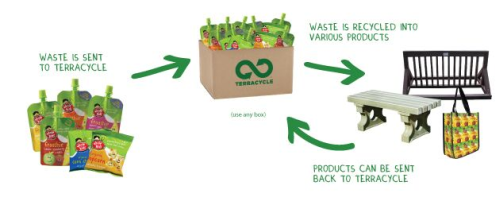
Australian consumers will be encouraged to upcycle their food pouches and snack wrappers through a recycling system called the Kids Pouch and Snack Brigade by sending them for free via post to program sponsor TerraCycle.
The pouches are then repurposed into sustainable items such as aprons, bags, park benches and chairs.
TerraCycle's general manager Anna Minns, who headed up its Australian launch last year, said the company aimed to talk to as many brands as possible about better solutions for difficult-to-recycle packaging.
“The only solution for post-consumer waste is landfill, as these materials don't offer enough value for them to be recycled the traditional way,” she said.
“It's negative economics to recycle it through the waste stream. The only way forward for companies with 'unrecyclable' packaging is to enter a voluntary product stewardship scheme."
For the Whole Kids brand, the partnership with TerraCycle means it can send a message to its environment-conscious consumers that it's a healthy product with a small footprint.
Families are asked to register on the TerraCycle website, and once over a kilogram of Whole Kids pouches and wrappers – which are made from aluminised plastic – are collected, the consumer can claim a free shipping label to send in their waste via Australia Post.
For each used pouch sent in, they receive two cents which they can then donate to a local playgroup, school or charity of choice.
Minns is confident the uptake will be significant.
“We already have close to 100,000 people taking part in our other programs,” she said.
“We're a social business and we've already made our mark in 21 countries, including 60 per cent of all schools in the US. As more and more people spread the word, this is going to be big.”
TerraCycle also turns oral care packaging, coffee capsules, beauty product packaging and cigarette butts into industrial items.


