



The personalisation trend has ramped up with a campaign by Mars which offers 21 different packaging choices for its Snickers bars in the US.
Similar in concept to Coca-Cola's Share a Coke bottles, each wrapper represents a different 'symptom' of hunger for customers to choose from.
Snickers' You’re Not You When You’re Hungry campaign is centred around how people act when they're wanting food.
Goofball, Drama Mama, Princess, Curmudgeon, Cranky, Irritable and Confused are among the different labels that will begin appearing on the wraps.
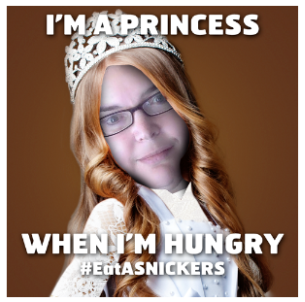
The packaging will also encourage people to share photos of their bars socially using the hashtag #EatASnickers, and will point them to a previously unveiled meme generator at SnickersMeme.com. Here, consumers can create images related to their particular type of hunger symptom and share them with friends socially on Facebook, Tumblr and Twitter.

The Mars brand has also launched a YouTube video in which a call centre employee responds to hunger emergency calls that have come in at 1-844-HUNGER-BAR:
The brand will also roll out print advertising and a promotion using augmented reality mobile app Blippar, which lets people take smartphone pictures of objects in the real world and supplements them with related digital content. Snickers says consumers will be able to use the platform to create customised Hunger Bars and other brand-related content and share them with friends.


