


Australia’s fastest growing eco-startup, Zero Co, has kicked off a crowdfunding campaign to help launch four new single-use plastic (SUP) free body products in a world-first for the body-care industry. To start production, Zero Co needs 5000 Aussies to sign up. It's already halfway there.
In 2019, Zero Co ran Australia's most funded kickstarter campaign for its home care product range in reusable, returnable and recyclable packaging, in which it raised $2 million with backing from more than 7500 Aussies.
The funding supported the company's launch in November last year and Zero Co has since grown a community of 35,000 Australians who support its cause.
It now has its sights set on the body care market, and here's why: Each year, Australians buy and throw away an estimated 80 million bottles of shampoo and conditioner, 20 million bottles of roll-on deodorant, and 30 million bottles of body lotion.
According to the 2019 Federal Government Waste Report, 85 per cent of plastics do not get recycled, which means 110.5 million of these plastic bottles are ending up in landfill each year. That’s 302,739 single-use bottles every day.
In an attempt to address this problem and eliminate single-use plastics from Aussie homes, Zero Co has worked alongside Dr Kate Forbes, the ex-global head of product at Aesop, to develop a SUP free body range, including shampoo, conditioner, deodorant and body lotion.
Dr Forbes has helped to create an industry leading, planet-friendly ingredients list that is free from SLS, silicones, parabens and EDTA.
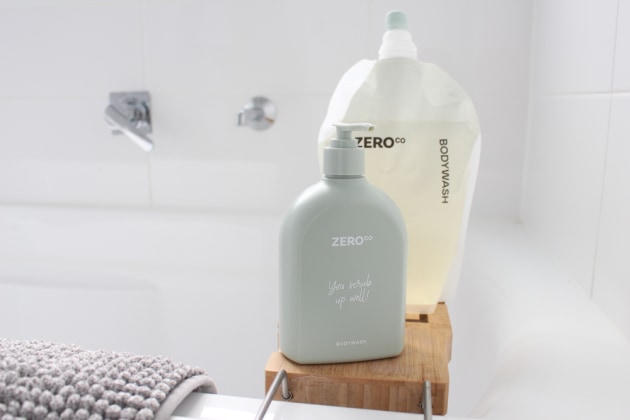
Before it can go into production, Zero Co need 5000 Aussies to pre-order a Zero Co Body Box, which contains all four refillable products with refill pouches made from landfill waste and reusable ‘Forever Bottles’ made from Ocean, Beach and Landfill plastics (OBL).
![Zero Co has a community of 35,000 Aussies buying its existing range. [IMAGE CREDIT: Mum Central]](http://yaffa-cdn.s3.amazonaws.com/yaffadsp/images/dmImage/StandardImage/credit_-mum-central.jpg)
Zero Co founder, Mike Smith, says: “Now, we’re ready to ask for help again. We have shared every part of the Zero Co journey with our customers from day one - the wins and the losses. Our community has been passionately part of our journey right from the beginning and have been instrumental in helping us grow this business from the ground up”.
“We know that Australians are willing to invest in more sustainable options from our success as Australia’s most funded Kickstarter of 2019. We’ve been lucky enough to build this business through the power of community from the beginning.
“I truly believe these new products will shake the industry on plastic standards and barriers for innovation, so I’m hoping we can get enough pre-orders to begin this next chapter for Zero Co and start implementing changes that our planet desperately needs. They smell bloody good too!”
Australians can pre-order a Zero Co Body Box today for $69.00 (including free shipping). To date, 2500 boxes have been ordered.


