


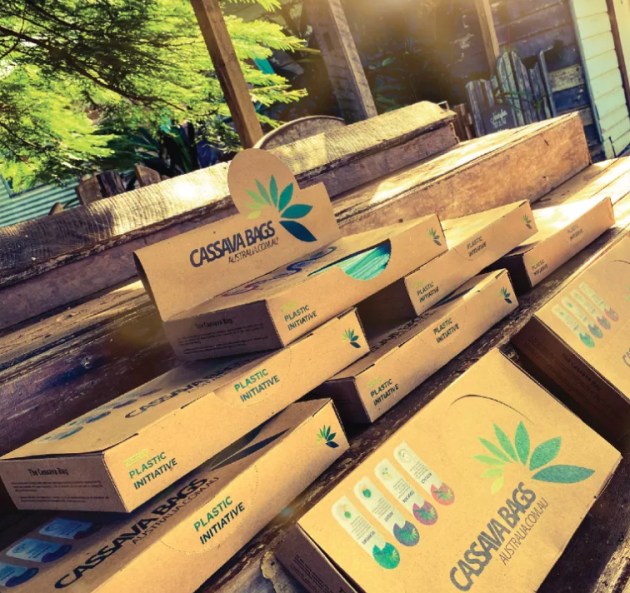
Cassava Bags Australia has launched a biodegradable single-use bag and liner range, which the company says is non-toxic, 100 per cent plastic-free, and won’t break down into microplastics.
Cassava promises that its products will take just three minutes to dissolve in hot water, or six months to biodegrade in soil, while taking only a few days to dissolve in the ocean, and remaining safe for marine life to consume.
The bag, manufactured in Indonesia, can be dissolved in warm water, and the speed of the process depends on how hot the water is (as shown in the video below), according to the company, which asserts it also contains waterproof properties that can prevent it from dissolving when out and about and it rains.
Bruce Delarossi, co-founder and CEO of Cassava says plastic bags are a scourge on the planet, and not only are they one of the biggest causes of environmental catastrophes, but they also take many years to decompose, release toxic substances into the soil, air and oceans, and kill billions of creatures across the planet.
“Our determination to create a truly biodegradable single-use bag has been driven by our desire to save the planet,” said Delarossi.
“A lot of people said they are going to do it, but we really have, and we are incredibly proud and very excited to be rolling out this extraordinary invention to the rest of the world – single-use bags and liners that are made from the cassava plant and dissolve in hot water.”
The cassava plant referred to is a drought-tolerant root vegetable that is native to South America, and which is now grown in many countries around the world.
“What we have done is extract and combine it with organic components to create a biodegradable film, which I believe is the first time anyone in the world has done this, and we have achieved this without the use of any petroleum or toxins,” explained Delarossi.
“Our products have been tested by internationally recognised companies as a plastic-free and biodegradable product.
“By contrast, it takes 500 years for a normal plastic bag to break down, and Australians use a whopping 10 million new plastic bags per day.”
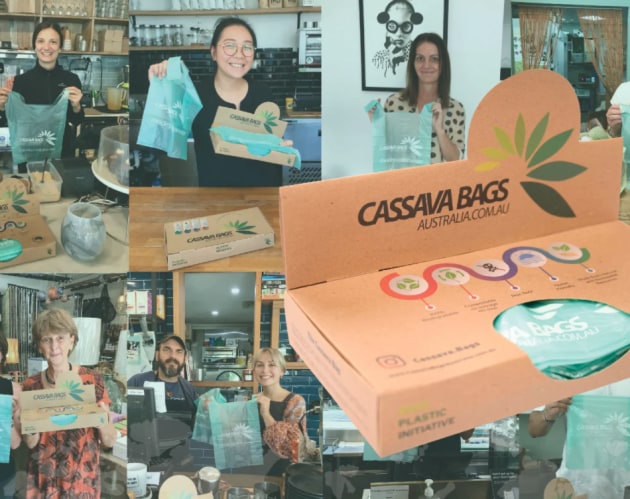
Delarossi believes that Cassava Bags will become a household brand across Australia and the rest of the world.
“Consumers are making their wishes known; they want to consume sustainable products,” Delarossi continued.
“Short-term, we want to ensure our products are distributed nationally and will be available across retailers, hospitality and medical sectors, to name a few. Beyond this, we want to expand into the global market.
“We also want to work towards restoring natural habitats like the Great Barrier Reef, and we want to negate the effects of climate change. It’s a tall order, but if we all do our part to swap out plastic bags for our cassava bags, it’ll be a great start to working together to achieve our dream of a cleaner planet.”
Cassava also has a range of similar functioning products in production, including bin liners, pet waste bags, mail-out bags, aprons, sanitation covers, and a range of carry retail bags.


