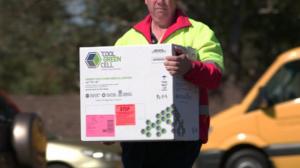
• DHL's Cool Green Cell will be used for temperature-controlled shipments of pharmaceuticals and medicines in all states of Australia by the end of the year.
    DHL's Cool Green Cell will be used for temperature-controlled shipments of pharmaceuticals and medicines in all states of Australia by the end of the year.

Close×

Global logistics company DHL has chosen Australia for the Asia-Pacific launch of a new re-usable and trackable packaging product for the safe transport of pharmaceutical and medical products requiring refrigeration in transport.

Dubbed the Cool Green Cell, the new packaging format is designed for shipments of pharmaceutical items that must be kept in controlled temperatures between +2°C and +8°C.

The packaging has been launched in NSW and Queensland, with the product planned to go live in other states by the end of 2013. DHL, part of Germany's Deutsche Post, said it also plans to launch the Cool Green Cell to other countries within the Asia Pacific region, but set no firm timetable.

The Cool Green Cell packaging is made of high quality polyurethane and includes embedded radio frequency identification (RFID) technology to enable complete tracking of deliveries through the supply chain.

“The launch of The Cool Green Cell in Australia signifies the start of a new chapter for cold chain deliveries in this country,” Saul Resnick, the vice-president for life sciences and healthcare in DHL's supply chain group, said.

“DHL has devised a temperature controlled packaging solution aimed at pharmacies, hospitals and clinicians, that is reusable, returnable and easily identifiable.

“This means our customers can reduce their supply chain costs and the time they would normally dedicate to waste management, all the while knowing they are using a solution that is environmentally friendly.”

Food & Drink Business

New CEO for Bulla

Family-owned manufacturer, Bulla Dairy Foods, has appointed Peter Hall as CEO. Hall joins in September, returning to Australia after more than 25 years running food and beverage businesses across North America, Europe, Latin America and the Caribbean.

Treasury Wine Estates has reported a statutory net loss of $1,078.7 million for FY26, with $1.31 billion in post-tax material items from its US write-downs drowning out an operating result that landed ahead of guidance.

Seedlab Australia says FMCG brands need to be more thoughtful about whether protein genuinely adds value, or whether it risks becoming the next overused health claim.