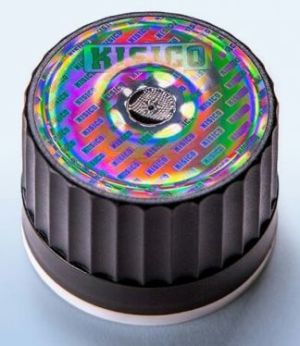
• The hologram has been fully integrated into the production process of the cap.
    The hologram has been fully integrated into the production process of the cap.
Close×

German packaging company Kisico has developed a cap which protects a package against counterfeiting through the use of a hologram.

No additives, inks or labels are needed for the hologram as it has been fully integrated into the production process of the cap.

The nanotechnology can be applied to any existing cap, and the style of the hologram can be individualised according to customer needs.

In combination with a tamper-evident ring, the HologramCap offers product protection using security technology developed by Swiss brand protection company Morphotonix.

This solution is targeted at the pharmaceutical industry, and those who package high-priced products.

It can also be used to differentiate between products, highlighting their individual qualities.

The holographic-like effects are embedded directly on complex geometry articles without any additives via micro/ nano-patterning of complex-shape products or master moulds, for industrial production of polymeric articles.

News source: The Active & Intelligent Packaging Industry Association (AIPIA)

Food & Drink Business

In the final chapter of court action regarding the 2020 collapse of Freedom Foods Group, the Federal Court has found former managing director and CEO, Rory Macleod, breached his duties as a director and officer, and failed to take all reasonable steps to secure the company’s compliance with its financial reporting obligations.

Australia’s food and beverage manufacturing industry is converging on Melbourne this week for foodpro 2026, the country’s leading trade event for processing, packaging and innovation. Held at the Melbourne Convention and Exhibition Centre (MCEC) from 26-29 July, foodpro 2026 will be opened at 10am on Sunday 26 July by Victorian Minister for Industry and Advanced Manufacturing and Minister for Skills and TAFE, Colin Brooks.

De Bortoli Wines is restructuring its vineyard portfolio across four regions, removing underperforming blocks in the oversupplied Riverina while buying new land in the Yarra Valley and converting most of its King Valley plantings to Prosecco, Pinot Grigio and Sangiovese.