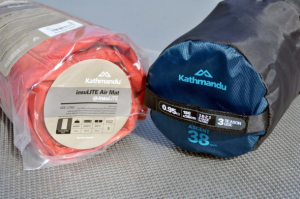
• Kathmandu chose to remove excess packaging such as plastic from its products.
    Kathmandu chose to remove excess packaging such as plastic from its products.
Close×

Camping gear company Kathmandu has adapted its product design to print or embroider label information directly onto its products.

Following a review to remove excess packaging, Kathmandu adapted its product design to print or embroider label information directly onto products such as mattress stuff sacks.

In an APC case study, it was highlighted that the change improved the visual aesthetic of the product and saved the company close to 3000 square metres of sticker paper and over 1000 square metres of virgin plastic.

Kathmandu also reduced its use of paper materials by removing the swing tags from water bottle products.

The APC team recognised that, in many cases, the bar codes could be printed directly onto the bottles.

Food & Drink Business

Dairy goods producer, Summer Land Camels, is gearing up to expand into the US health and wellness market, supported by a crowdfunding campaign conducted via OnMarket.

Tasmanian whisky pioneer, Bill Lark, has been appointed a Member of the Order of Australia (AM) in the 2026 Australia Day Honours List, recognising his extraordinary contribution to the Australian distilling industry and Tasmanian community.

Australia’s beverage market is being reshaped by powerful demographic and behavioural forces that will define demand for decades. At Suntory’s Rituals event in Sydney, demographer Bernard Salt and Suntory Global Spirits Global VP of Insights and Analytics, Jing Mertoglu, outlined a converging story – one that positions Australia and New Zealand as two of the most strategically attractive beverage markets in the developed world.
