


Colour Graphic Services will offer free detailed offset, digital and wide-format colour health checks at PacPrint 2017.
The colour management and ISO colour certification specialist will exhibit at the show in Melbourne from 23-26 May.
‘The Colour Doctor’ David Crowther (pictured above, left) will measure and analyse a special test forme, pre-printed on a device of the visitor’s choice.
A report is then produced using the Mellow Colour software suite, with suggested remedies, identifying where any colour issues are by using ISO 12647 as the benchmark.
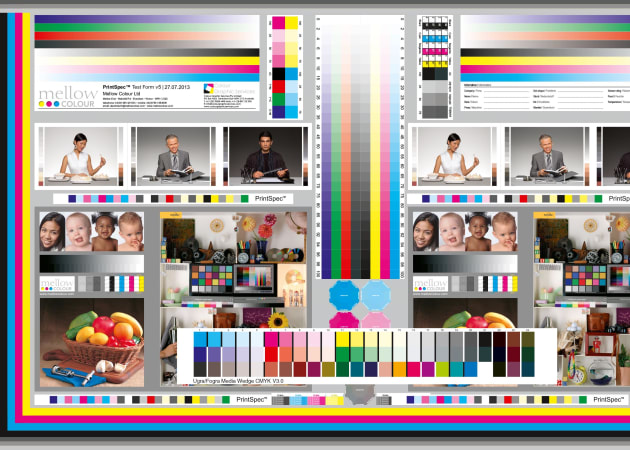
To take advantage of this, ANZ printers must request the specially constructed test forme (pictured) ahead of PacPrint, and print it out to the best of their ability on the device of their choice.
They can then bring the printed sheet to PacPrint, to stand B62, where Crowther will measure it using ISO 13655-compatible Techkon spectrophotometers. Within seconds, PrintSpec software will produce a full report on any colour management issues and possible remedies.
“The PDF test forme file we send in advance is big, around 200mb,” Crowther says, “so either high bandwidth or a file sending service such as DropBox or SendStuffNow can be used.
"It’s a PDF so can easily be put into the workflow and printed out.”
Email here for the free PDF file.


